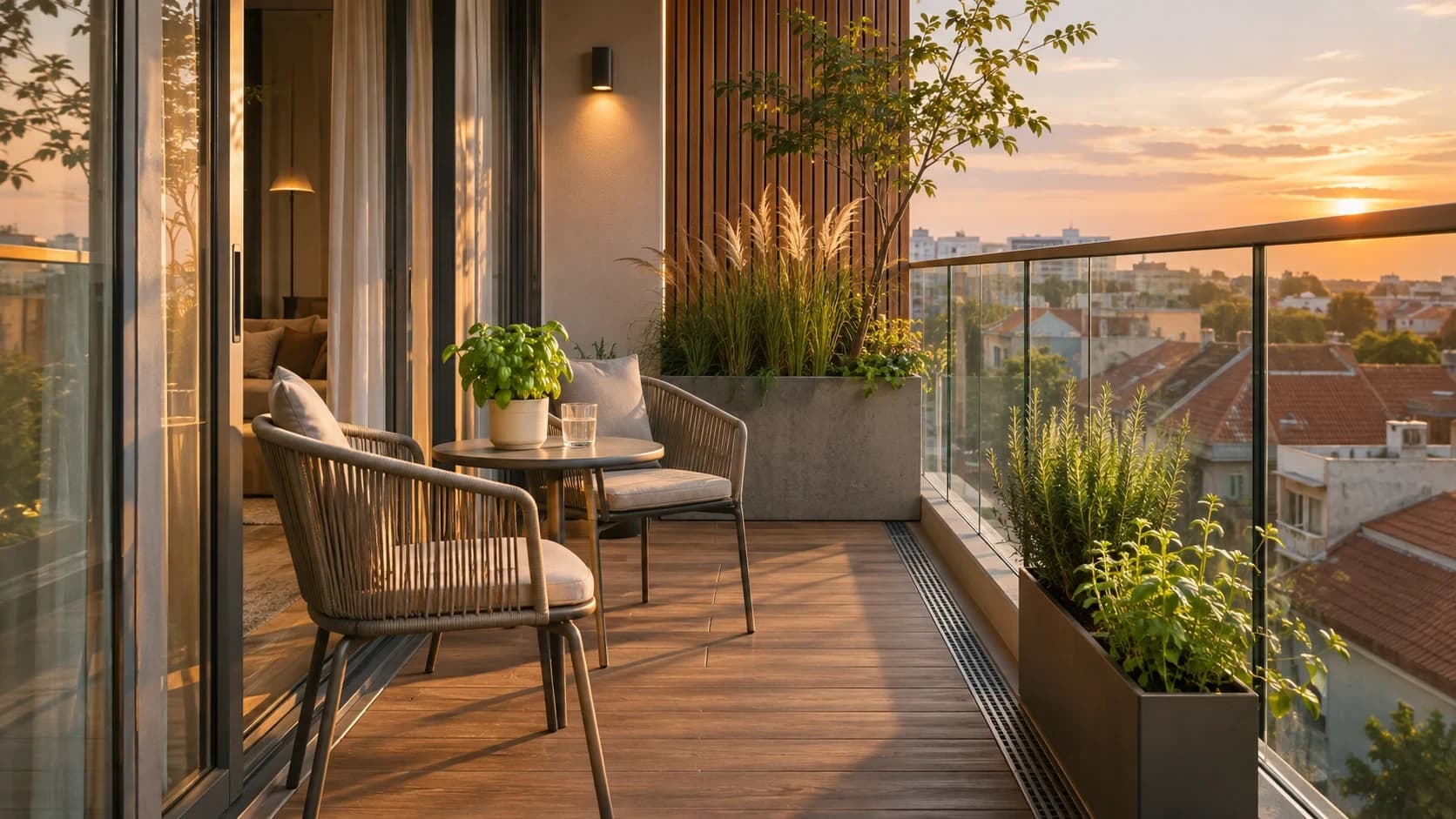
A balcony is small, exposed to the weather and attached to the outside of a building. Those three facts shape every decision on it more than any style does. Before choosing chairs or planters, settle what the space is for, what it can carry and how it sheds water. The rest follows from those answers.
Decide What the Balcony Is For
Write down the one or two things you will actually do there: morning coffee for two, a small herb garden, a reading chair, drying laundry, or a place to eat outside in summer. A balcony that tries to do everything usually ends up as storage.
Then measure the usable area, not the slab. Subtract the swing of the door that opens onto it, any air-conditioning unit, drain outlets and the zone along the railing that you want to keep clear. Draw the furniture at full size on that plan, including chairs pulled back from a table. If two people cannot pass each other with the chairs out, choose smaller pieces or a single function.
Check Load and Building Rules First
Wet soil, large planters, stone pavers, hot tubs and built-in seating all add weight. A balcony is designed for a certain load, and that limit is not visible from the surface. For anything heavy or permanent, ask the building manager, the original drawings or a structural engineer before buying.
In apartment buildings, check the rules as well. Many buildings restrict what can be fixed to the railing or the facade, what screens are allowed, and whether open flames or grills are permitted. Finding this out early saves returning furniture or removing a privacy screen after a complaint.
Keep Children and Railings in Mind
Anything a child can climb, such as a stool, a low cabinet or a stack of planters, should stay away from the railing. Hanging planters on the inside of the railing are easier to water and do not risk falling onto the street below. Check that every fixture is secured against wind, including umbrellas, lightweight chairs and lanterns.
Plan for Water Before Decorating
Find the drain and the direction the floor slopes toward it. Outdoor rugs, decking tiles and large planters should not block that path. Raise planters on feet so water can run underneath, and use saucers where runoff would stain the slab or drip onto a neighbor's balcony.
If you add decking tiles, choose a system that can be lifted, so you can clear leaves and debris from the drain. Look at the balcony after heavy rain once. Puddles that remain the next day point to a blocked outlet or a low spot that furniture will make worse.
Choose Furniture and Materials for the Exposure
Note how much direct sun, rain and wind the balcony gets, and at which times of day. A covered, sheltered balcony can take materials that a fully exposed one cannot.
Folding or stacking chairs suit a narrow balcony where the space changes use during the day.
A bench with storage can hold cushions and gardening tools, if its lid closes tightly and its base is raised off the wet floor.
Wall-mounted shelves and planters free up floor area on a small balcony.
Fabrics should be sold for outdoor use. Store cushions indoors or in a closed box when not in use.
Ask the seller how each material handles sun, standing water and winter, and how it should be cleaned. Metal fixings should be suitable for outdoor use so they do not leave rust marks on the slab.
Light It for How You Use It
Use fixtures rated for outdoor or wet locations. A wall light near the door covers safe entry. A low, warm light near seating works better for evenings than a bright light aimed into people's eyes or into a neighbor's window. Solar or battery lights avoid running new wiring, which in an apartment may need approval.
Use Plants That Suit the Spot
Choose plants for the sun and wind the balcony actually gets, not for how they look in a shop. Group pots so they shade each other and are easier to water. Check how you will reach the plants on the far side, and whether trailing plants will drop leaves onto the balcony below.
Keep the Look Simple
A small outdoor space reads best with a short list of materials and colors. Pick one material for furniture, one for planters and one accent color for cushions or pots. Tie the palette to the room the balcony opens from, so the two spaces read as one view through the door.
See the Space Before You Buy
A balcony is small enough that a few centimeters decide whether a layout works. If the balcony is part of a new building or a renovation, Lesmee can produce exterior 3D renderings from the drawings, so the owner and the design team can check furniture scale, planters and materials in the context of the facade before anything is ordered.