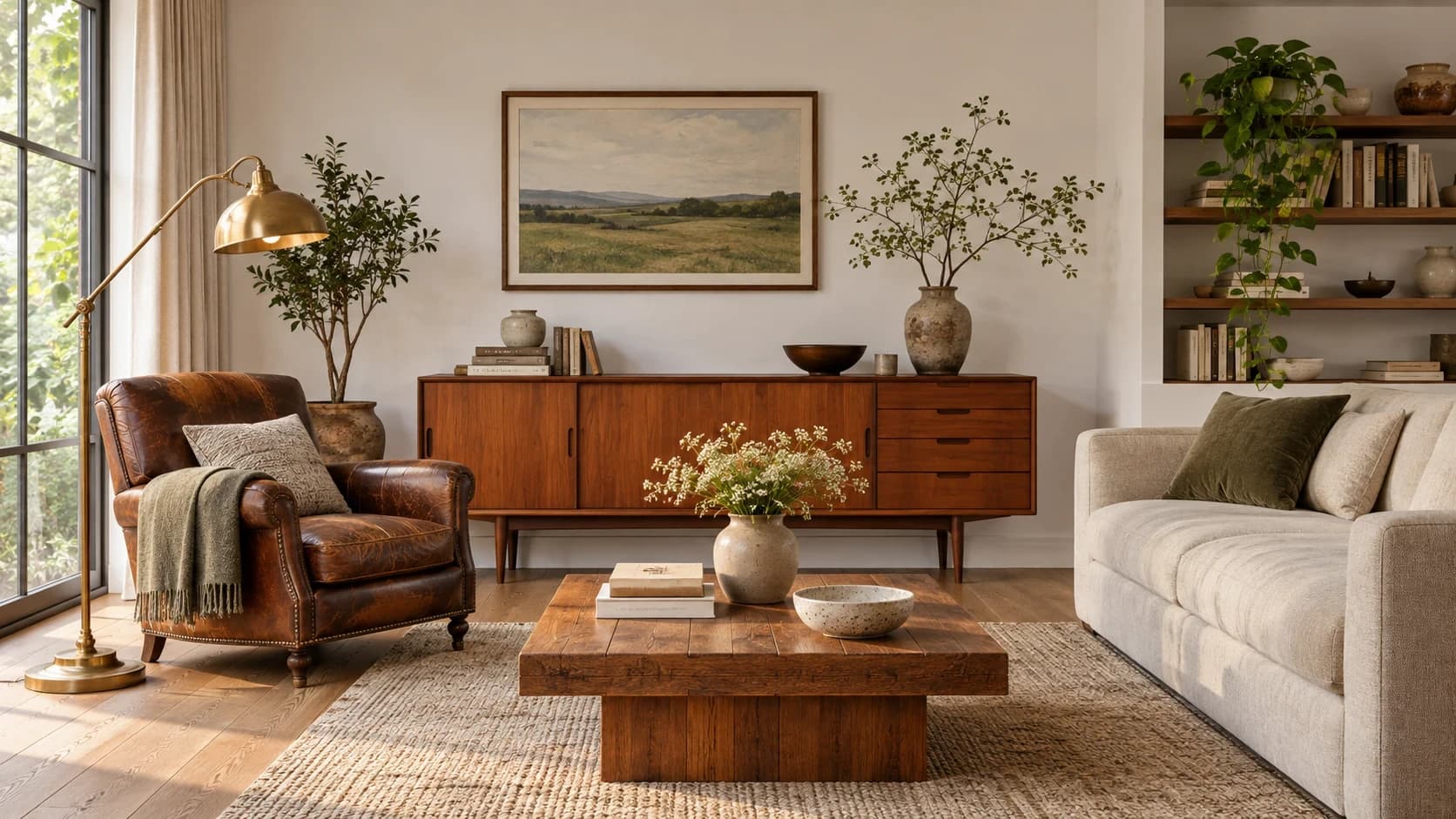
A vintage interior is less a fixed style than a way of mixing. It brings furniture, lighting and objects from past decades into a home that still works for daily life. Done well, it gives a room history and character. Done carelessly, it looks like a storeroom. The difference usually comes down to a few decisions.
What "Vintage" Means
There is no single agreed definition. In furniture and decoration, "vintage" usually refers to pieces from past decades of the 20th century that are old enough to show a distinct period character, while "antique" is commonly reserved for much older items, often a century or more. "Retro" is often used for new pieces made to look like they come from an earlier decade.
For a room, the label matters less than the result: a space that clearly refers to an earlier time without feeling stuck in it.
Choose One Era to Reference
Rooms read more clearly when their vintage pieces share a period. Each decade had its own shapes and colors:
The 1920s and 1930s brought geometric patterns, polished wood, chrome details and rounded upholstered chairs.
Mid-century pieces from the 1950s and 1960s are often recognized by tapered wooden legs, low sideboards, warm teak or walnut, and simple, light forms.
The 1970s favored warm earth tones such as orange, brown and mustard, rattan and cane, and low, deep seating.
You do not need to follow one decade strictly. But if most pieces share a period, a single piece from another era can stand out as a deliberate contrast rather than an accident.
Keep a Calm Background
Old pieces need space around them to be noticed. Plain walls in warm neutrals such as cream, sand, soft gray or warm white give them a background. Wallpaper with a period pattern can work well on one wall, or in a small room such as a hallway or powder room, rather than throughout the house.
Keep the fixed elements, such as kitchen cabinets, flooring and built-in storage, simple and modern. They are expensive to change and will outlast any one collection of objects.
Mix Old and New Furniture
A practical rule is to let the large, hard-working pieces be new and the character pieces be old. A new sofa with a supportive seat, paired with a vintage armchair and side table, gives comfort and personality at the same time. A modern dining table can be surrounded by mismatched vintage chairs, or a vintage table with new chairs.
When buying vintage furniture, check:
Structure: wobbly joints, cracked legs and drawers that stick.
Upholstery: old foam and padding often need replacing, which changes the cost of the piece.
Finish: painted furniture from earlier decades may contain lead paint. Have old paint tested before sanding or stripping it.
Smell and pests: inspect old wood and fabric for signs of insects before bringing them indoors.
Light It Carefully
Vintage lamps and pendants add strong character, but old wiring can be unsafe. Have any old light fitting checked and, if needed, rewired by a qualified electrician before use. Warm-colored bulbs suit most vintage interiors better than cool white light.
Do not rely on decorative fittings alone. Make the most of daylight from windows, and add modern task lighting where people read, cook or work. A room full of dark wood and muted colors can feel gloomy without enough light.
Use Objects With a Light Hand
Clocks, radios, framed photographs, ceramics, books and glass vases all carry a vintage reference. Group them in small sets on a shelf or sideboard rather than spreading them across every surface. Rotate what is on display and store the rest.
Plants and fresh flowers in glass or ceramic vessels soften the look and add life to older objects.
Where It Goes Wrong
The common failure is too much. A room where every surface holds an old object, every wall carries a pattern and every piece of furniture is from a different decade feels like a shop or a film set. Edit until each vintage piece has a reason to be there.
The other risk is sacrificing comfort and safety for authenticity. A beautiful old chair that is unpleasant to sit in, or a lamp with failing wiring, does not belong in daily use.
Plan the Background First
The fixed parts of a vintage room, such as cabinets, shelving, flooring and wall color, are what hold the collection together. Lesmee can render a room in 3D from your drawings, so you can test how built-in joinery, colors and lighting work with the pieces you plan to bring in before ordering anything.